The Sacral Chakra — Svādhiṣṭhāna (स्वाधिष्ठान)
General Description
The Sacral Chakra, known in Sanskrit as Svādhiṣṭhāna, is the second chakra in the traditional Indian system of subtle energy centers. Located in the lower abdomen, just below the navel, it governs creativity, sexuality, pleasure, and emotional fluidity. In Hindu traditions, chakras are described as spinning wheels of energy within the subtle body, influencing both physical and spiritual well-being.
While originally rooted in Tantric yoga and Ayurvedic philosophy, the chakra system has spread widely across the world, becoming a cornerstone in holistic practices, meditation, energy healing, and contemporary spiritual wellness. Today, the sacral chakra is embraced not only as an esoteric symbol but also as a practical framework for emotional and energetic balance.
Historical Roots
The concept of chakras originates in India, with early references found in the Upanishads (c. 600–300 BCE) and later fully developed in Tantric and Yogic texts such as the Shat Chakra Nirupana (16th century). Svādhiṣṭhāna literally means “one’s own seat” or “dwelling place of the self,” emphasizing its role as the foundation of individuality, desire, and emotional expression.
Over centuries, this model has been adopted globally and often blended with other systems, such as Chinese medicine and Western psychology, highlighting cross-cultural echoes of how humans understand energy, vitality, and creativity.
 The Sacral Chakra — What It Is and What It Does
The sacral chakra sits in the lower abdomen and corresponds physically to the reproductive organs, kidneys, and bladder. Energetically, it is the center of creative life force, emotional connection, and the experience of pleasure. It governs our ability to flow with change, to express desire, and to nurture intimacy with both ourselves and others.
Color: Orange — symbolizing warmth, creativity, and movement.
Stones: Carnelian, orange calcite, moonstone, amber. These stones resonate with fluidity, sensuality, and emotional healing.
Aromas: Sandalwood, ylang-ylang, jasmine, clary sage, patchouli — scents that encourage openness, sensuality, and emotional release.
When the 2nd Chakra, Svadisthana Is Closed
When the sacral chakra is blocked or underactive, one may experience:
- Distanced from emotions,
- Isolated in sensual or intimate expression, perhaps shame or discomfort around sexuality,
- Lifelessness in creativity, stiff energy, or emotional flatness.
Physical effects: Lower back pain, menstrual issues, reproductive problems, bladder or kidney imbalance.
Emotional effects: Creative stagnation, emotional numbness, fear of intimacy, guilt around sexuality, difficulty expressing desires.
Energetic experience: A sense of dryness, lack of flow, resistance to change.
Conversely, when it is balanced and open, there is vitality, emotional depth, healthy sexuality, and a natural sense of joy.
Practices to Open the Sacral Chakra
General practices include meditation on the lower abdomen, chanting the bija mantra VAM, creative expression (dance, painting, music), and connecting with water through bathing or swimming. Movement practices that emphasize hip opening — like dance or pelvic yoga flows — also encourage the sacral chakra to open.
Meditation focusing on the lower belly, chanting VAM (the bija/mantra seed sound), water-based rituals or spending time near water, hip-opening movement or dance, mindful breathing into the sacral region.
Intercultural mixture:
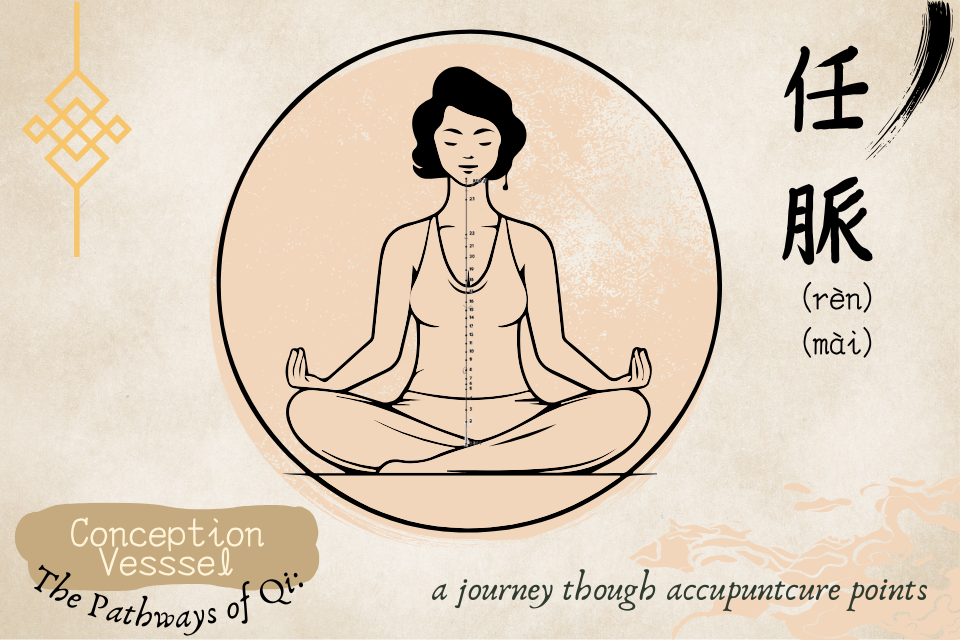
In Chinese medicine, the Ren Mai (Conception Vessel) runs along the front midline of the body through this same lower-abdomen area, through this lower abdomen area it nourishes Yin and essence., emphasizing reproduction, creativity, and emotional grounding. Points such as CV3-CV4-CV5–CV6 are located in the same region as the sacral chakra, renew Yin, nurture essence, creativity, fertility. Thus, practices for the Sacral Chakra and Ren Mai openess often overlap: moving energy here strengthens both systems of vitality and receptivity.
While distinct systems, both traditions recognize this area of the body as the seat of life force, pleasure, and generative energy.
Yoga Practices for the Sacral Chakra
Hip-opening poses: Baddha Konasana (Bound Angle), Upavistha Konasana (Wide-Legged Forward Bend), Eka Pada Rajakapotasana (Pigeon Pose), Cobra (Bhujangasana) with focus on pelvic undulation
Flow practices: Cat-Cow (Marjaryasana-Bitilasana), pelvic tilts, gentle undulations.
Breathwork in a seated pelvic floor awareness, deep belly breathing, alternate nostril breathing to harmonize.
Herbs for the Sacral Chakra
Here are herbs from Ayurveda, Greek/traditional Mediterranean, and international sources that are associated (in modern herbalism, Ayurveda, and cross-cultural symbolism) with creativity, sensuality, flow, and emotional nourishment — the key qualities of Svādhiṣṭhāna.
| Tradition | Herb | Actions / Why it fits Sacral Chakra | Notes / Usage |
|---|---|---|---|
| Ayurvedic | Shatavari (Asparagus racemosus) | Famous yin/ojas tonic; nourishes reproductive system, moistens dryness, enhances feminine energy and creativity. | Decoction, powder, or capsule; best taken with milk. |
| Ayurvedic | Gotu Kola (Centella asiatica) | Cooling, balancing; supports subtle awareness and emotional flow, calms excess heat. | Tea or powder; often combined with ghee. |
| Ayurvedic | Chandana (Sandalwood, Santalum album) | Cooling, fragrant, harmonizes emotions, balances passion with clarity. | Used as incense, oil, or paste. |
| Greek / Mediterranean | Myrtle (Myrtus communis) | Sacred in Aphrodite’s rites; associated with love, sensuality, purification of emotions. | Infusion or essential oil in rituals. |
| Greek / Mediterranean | Rose (Rosa damascena) | Symbol of love and emotional flow; harmonizes reproductive and heart energies, cools heat. | Rose tea, rose water, essential oil. |
| Greek / Mediterranean | Fennel (Foeniculum vulgare) | Supports digestion and reproductive vitality, softens emotional tension, linked with fertility. | Seeds in tea or food. |
| International / Other | Damiana (Turnera diffusa) | Traditional aphrodisiac, enhances sensuality, creativity, and joy. | Tea or tincture, often in small doses. |
| International | Ylang-Ylang (Cananga odorata) | Exotic floral aroma, sensual and relaxing, promotes pleasure and release of tension. | Essential oil in aromatherapy. |
| International | Cinnamon (Cinnamomum verum) | Warming, increases circulation, awakens passion and creative fire. | In food, tea, or oil blends. |
| International | Vanilla (Vanilla planifolia) | Sweet, comforting, inspires pleasure and emotional nourishment. | Infusion, natural extract, or aromatherapy. |
The Sacral Chakra’s water element is mirrored in herbs that are moistening, cooling, aphrodisiac, or emotionally balancing. Just as the Root Chakra herbs focus on grounding and stability, the Sacral’s resonate with fluidity, intimacy, and creativity.
Mantra of the Sacral Chakra
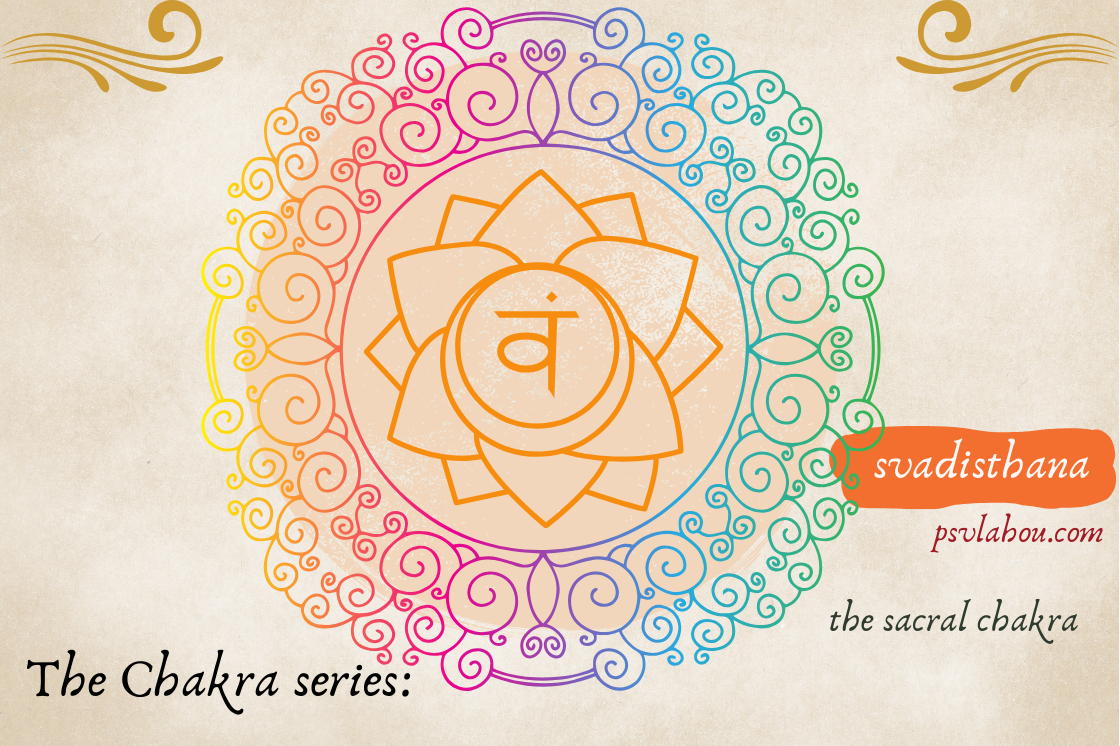
The bija (seed) mantra of the sacral chakra is VAM (वं). Chanting VAM while focusing awareness on the lower abdomen helps to awaken and balance this energy center, resonating with its element — water.
Reflection Prompt:
Where in my life am I resisting flow or pleasure? How can I allow creativity, intimacy, and joy to move through me with the ease of water?
References
“Muladhara Chakra” – Wikipedia. Βικιπαίδεια
- “Muladhara: Significance and Symbolism” – WisdomLib.
“Spiritual Understanding of Muladhara Chakra – A Review” – IJRASET, 2024. ijraset.com
“Muladhara Chakra – The Root Chakra, Features …” – Easy Ayurveda. easyayurveda.com
Sadhguru, “Muladhara Chakra: Stabilizing the Foundation.” isha.sadhguru.org
“Ayurveda and the Chakras: Balancing Body and Soul” – AyurvedicIndia.info. Herbs such as Ashwagandha for Muladhara; Shankhapushpi, Brahmi for Svādhiṣṭhāna. ayurvedicindia.info
“Best Ayurvedic Herbs for Chakras” – IndiaGardening.com. Lists herbs like Dandelion root, Ginger, Damiana, Calendula, Licorice for Root & Sacral. indiagardening.com
“Powerful Herbs for Chakra Alignment & Healing” – Chakra Serenity. Root Chakra: Ashwagandha, Ginger, Turmeric, Dandelion Root; Sacral Chakra: Hibiscus, Cinnamon, Damiana, Shatavari. Chakra Serenity
“Herbs for Sacral Chakra Energy Balance” – Healing Sounds. Hibiscus, Calendula, Damiana, Gardenia etc. Healing Sounds
“Herbs for Chakras: Heal Your Chakras from Root to Crown” – Moksha Botanicals. Sacral Chakra herbs like Black Musli, Shilajit etc. MOKSHA BOTANICALS
Sacral Chakra (Svādhiṣṭhāna) — Overview Table
| Aspect | Details |
|---|---|
| Name & Meaning | Svādhiṣṭhāna (Sanskrit: स्वाधिष्ठान) — “One’s own dwelling place” or “seat of the self.” |
| Location | Lower abdomen, about two fingers below the navel; pelvic area. |
| Element | Water — symbolizes flow, adaptability, emotions, and creativity. |
| Colour | Orange — warmth, passion, fluidity. |
| Symbol | Six-petaled lotus with a crescent moon inside; symbolizing cycles, change, and creative potential. |
| Seed Mantra (Bīja) | VAM (वं) |
| Stones / Crystals | Carnelian, Orange Calcite, Moonstone, Amber, Sunstone. |
| Aromas / Essential Oils | Ylang-ylang, Jasmine, Sandalwood, Clary Sage, Patchouli. |
| Associated Body Areas / Organs | Reproductive system, kidneys, bladder, lower digestive tract, hips, lower back. |
| Psychological Qualities | Creativity, sensuality, emotional flow, pleasure, intimacy, adaptability. |
| When Balanced | Free emotional expression, healthy sexuality, creative energy, joy in change, openness to relationships. |
| When Blocked / Closed | - Physical signs: Reproductive issues, urinary problems, pelvic tension, low libido, digestive sluggishness. - Emotional signs: Creative block, guilt/shame around sexuality, emotional numbness, rigidity, fear of change. |
| How You May Feel When Closed | Flat emotionally, unmotivated creatively, cut off from joy, difficulty connecting with self or others, ungrounded sensuality, guilt. |
| Practices to Open | Meditation on orange light in the lower belly, chanting VAM, water rituals, pelvic awareness breathwork, creative expression (dance, art). |
| Yoga Practices | Hip openers: Baddha Konasana (Bound Angle), Eka Pada Rajakapotasana (Pigeon Pose), Cat–Cow flow, Goddess Pose, gentle pelvic undulations, Cobra Pose. |
| Intercultural Parallels | Chinese medicine: The Ren Mai (Conception Vessel) flows through the same region; points like CV4–CV6 regulate fertility, Yin essence, and creative vitality. Both systems view this area as the seat of creation and reproduction. |
| Herbs (Ayurvedic, Greek, International) | Ayurvedic: Shatavari (Asparagus racemosus), Ashoka (Saraca asoca), Safed Musli (Chlorophytum borivilianum). Greek / Mediterranean: Calendula (Calendula officinalis), Hibiscus (Hibiscus sabdariffa), Rosemary (Rosmarinus officinalis). International: Damiana (Turnera diffusa), Vanilla (Vanilla planifolia), Cinnamon (Cinnamomum verum), Cloves (Syzygium aromaticum). |
| Herbal Actions | Aphrodisiac, uterine tonic, circulatory stimulant, emotional soothing, mood elevation, warmth + flow. |
| Reflection Prompt | “Where in my life do I resist flow? What emotions or desires am I holding back that long to be expressed?” |
Panagiota Sophia Vlahou
Certified Beekeeper | Specializing in Traditional Beekeeping & Natural Wellness Methods
Trained in Traditional Acupuncture – Academy of Traditional & Chinese Medicine
Member of the Beekeepers’ Association of Attica-Greece
Disclaimer: This article is for educational and informational purposes only. It is not intended to diagnose, treat, cure, or prevent any disease, and it does not substitute professional medical advice. Always consult a qualified healthcare professional before making any changes to your diet, lifestyle, or health practices.